
Pilates, Explained: What It Is, What It Does, and What to Expect at Rêve
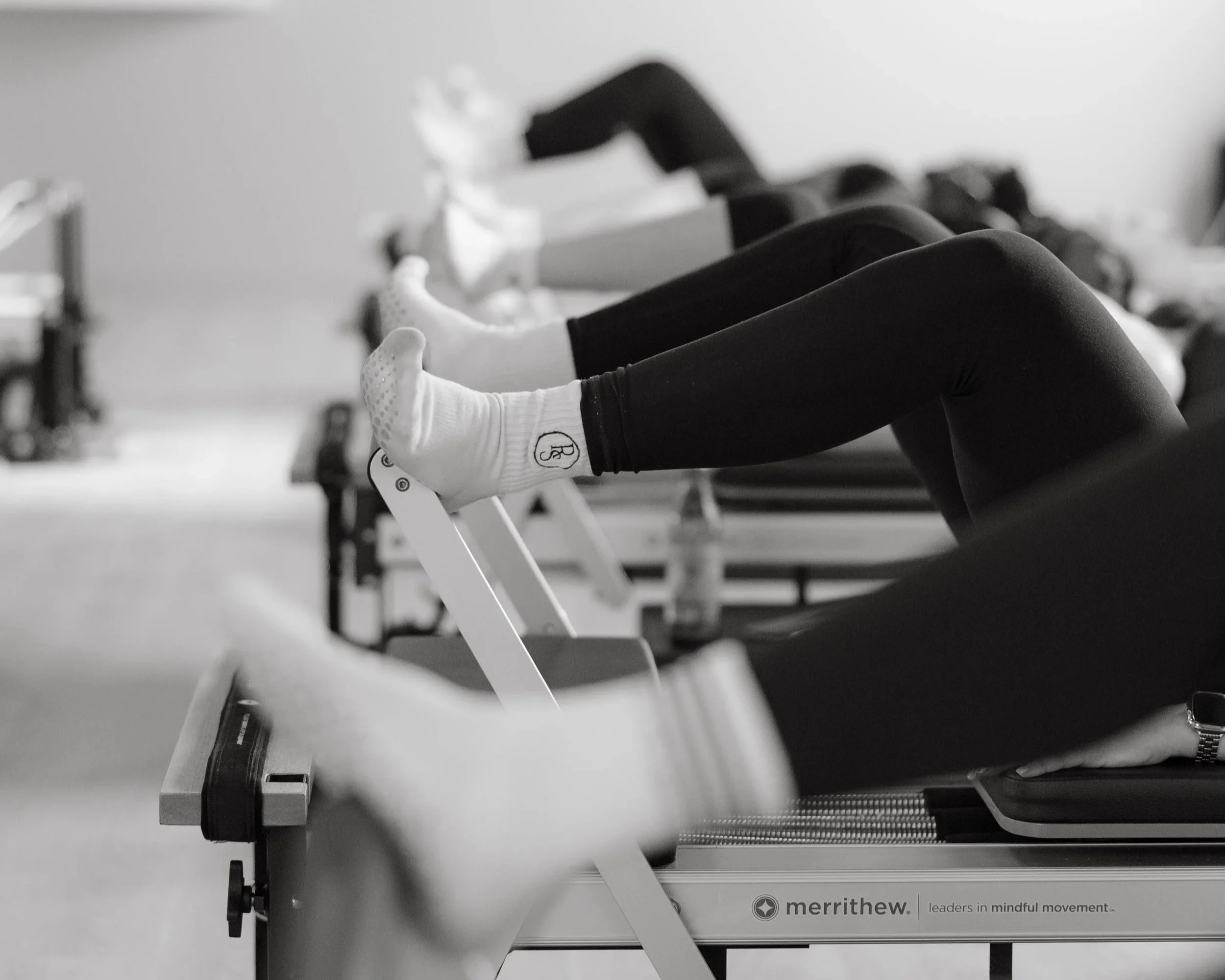
Pilates is having a moment, and if you've been curious about it but aren't quite sure what it actually is, you're not alone. It's one of those things that's everywhere until you try to explain it, and then suddenly the words are harder to find than you'd expect.
Is it stretching? Kind of. Is it strength training? Also kind of. Is it as intimidating as the equipment looks? Not even close.
Here's the straightforward version. The Rêve version.
WHAT PILATES ACTUALLY IS
Pilates is a low-impact movement practice built around controlled, intentional exercise. It was developed in the early 20th century by Joseph Pilates (so yeah, it’s not a new trend), who originally called it "Contrology" or the study of control over the body. The idea was simple: that the mind and body work together, and that true physical fitness isn't about how much you can lift or how fast you can run, but about how well you can move.
That alone really tells a story about why we created Rêve.
At its core, Pilates trains the deep stabilizing muscles. The muscles that support your spine, your joints, and your posture rather than just the surface muscles that most conventional workouts target. The result is strength that feels different from the inside out. Longer, more functional, more connected.
It's also one of the most adaptable movement practices in existence. Whether you're an athlete looking to move better, someone recovering from an injury, or a complete beginner who hasn't worked out in years, Pilates meets you where you are and builds from there.
THE PRINCIPLES OF PILATES
Every movement in Pilates is rooted in six core principles. They're what separates Pilates from a generic core workout and once you understand them, you'll start to notice them woven into every cue your instructor gives.
Concentration
Pilates is not a workout you can do on autopilot. Every movement asks for your full attention not just physically, but mentally. Where is your weight? What are your hips doing? Is your breath leading the movement or trailing it? That level of presence is part of what makes it so effective, and honestly, part of what makes it so satisfying.
Control
This is where the name "Contrology" comes from. In Pilates, no movement is accidental. The goal is never to muscle through a rep, it's to own every inch of it. Control over the carriage, control over your breath, control over the parts of your body that aren't moving. That discipline is what builds the deep, functional strength Pilates is known for.
Centering
Everything in Pilates originates from the center, the deep core muscles that wrap around your spine and pelvis. Think of it less as "doing abs" and more as building a stable foundation that every other movement draws from.
Flow
Pilates is meant to move. Exercises transition into each other with intention and rhythm, and within each movement there's a quality of ease that comes with practice. Flow doesn't mean effortless, it means efficient. No bracing, no gripping, no unnecessary tension holding the movement hostage.
Precision
One precise repetition is worth ten sloppy ones. Pilates prioritizes quality over quantity in a way that most fitness formats don't, and your instructor is trained to see the details. A hip that's hiking, a shoulder that's creeping up, a breath that's being held. Precision is what makes the practice safe and what makes it work.
Breathing
Breath is not an afterthought in Pilates, it's structural. Specific exercises call for inhales and exhales at specific moments, and that timing affects everything from spinal decompression to core activation. If you're holding your breath in class, your instructor will catch it. It's one of the first things to train and one of the last things that feels fully natural, but when it clicks, the whole practice opens up.
WHAT IT DOES FOR YOUR BODY
The benefits of Pilates are well documented, but they're also the kind that are hard to fully appreciate until you're a few weeks in and suddenly notice that you're standing differently, moving more easily, or recovering faster than you used to.
Strength without bulk.
Pilates builds long, functional strength by targeting the deep stabilizing muscles rather than just the superficial ones. You'll feel it in places where conventional workouts tend to miss… your inner thighs, your deep core, the small muscles around your shoulder blades and hips that hold everything else together.
Mobility and flexibility.
Every Pilates class moves your body through its full range of motion, which means flexibility is built into the practice rather than tacked on at the end. Over time clients notice they move more freely. Not just in class, but in everyday life.
Posture.
This one sneaks up on you. The centering and precision work in Pilates retrains the muscles responsible for how you hold yourself upright. Clients who sit at a desk all day, carry stress in their shoulders, or have dealt with chronic back tension tend to notice this one first.
Body awareness.
Perhaps the most underrated benefit. Pilates teaches you to feel what your body is doing in space. Which muscles are working, which are compensating, where you're holding unnecessary tension. That awareness doesn't stay on the reformer. It changes how you move through everything.
Low impact, high return.
Because Pilates works with your body rather than against it, it's sustainable in a way that higher-impact training often isn't. It complements almost every other form of movement and holds up well across decades, which is why you'll find clients of every age and fitness level in our classes.
PILATES AT RÊVE
Pilates has been around for over a century, but the way it's taught, the environment it lives in, and the equipment it's practiced on varies enormously from studio to studio. At Rêve, we've built something specific.
Our studios are reformer-based, which means every class is taught on the Merrithew V2 Max (a professional-grade apparatus that offers a level of precision and consistency you won't find on every reformer). The equipment matters because the feedback it gives your body matters. Smooth, calibrated resistance means the work is actually doing what it's supposed to do.
What makes the Rêve method distinct is how we pair the reformer with the treadmill. The two complement each other in a way that's hard to replicate anywhere else. The reformer builds deep, functional strength and body awareness, the treadmill layers in cardiovascular work and endurance. Together they create a complete picture of fitness that neither delivers alone.
Our instructors are trained to teach, not just count reps. They're watching your carriage, reading your movement, and adjusting your load and position in real time—which means every class is more personalized than a group fitness format might suggest. Whether you're in your first class or your 50th, you're being seen.
And the environment we've built is one where showing up as a beginner is not just okay, it's expected and welcomed. The learning curve can be real, but so is the support system around it.
Pilates changed the way a lot of our clients move, feel, and think about their bodies. We'd love for it to do the same for you.
The Rêve method is something you have to experience to understand. Grab your first class and find out what your body is capable of.
