
WE BROUGHT THE TREADMILL INTO OUR REFORMER STUDIO… CO-FOUNDER MOLLY TELLS YOU WHY.
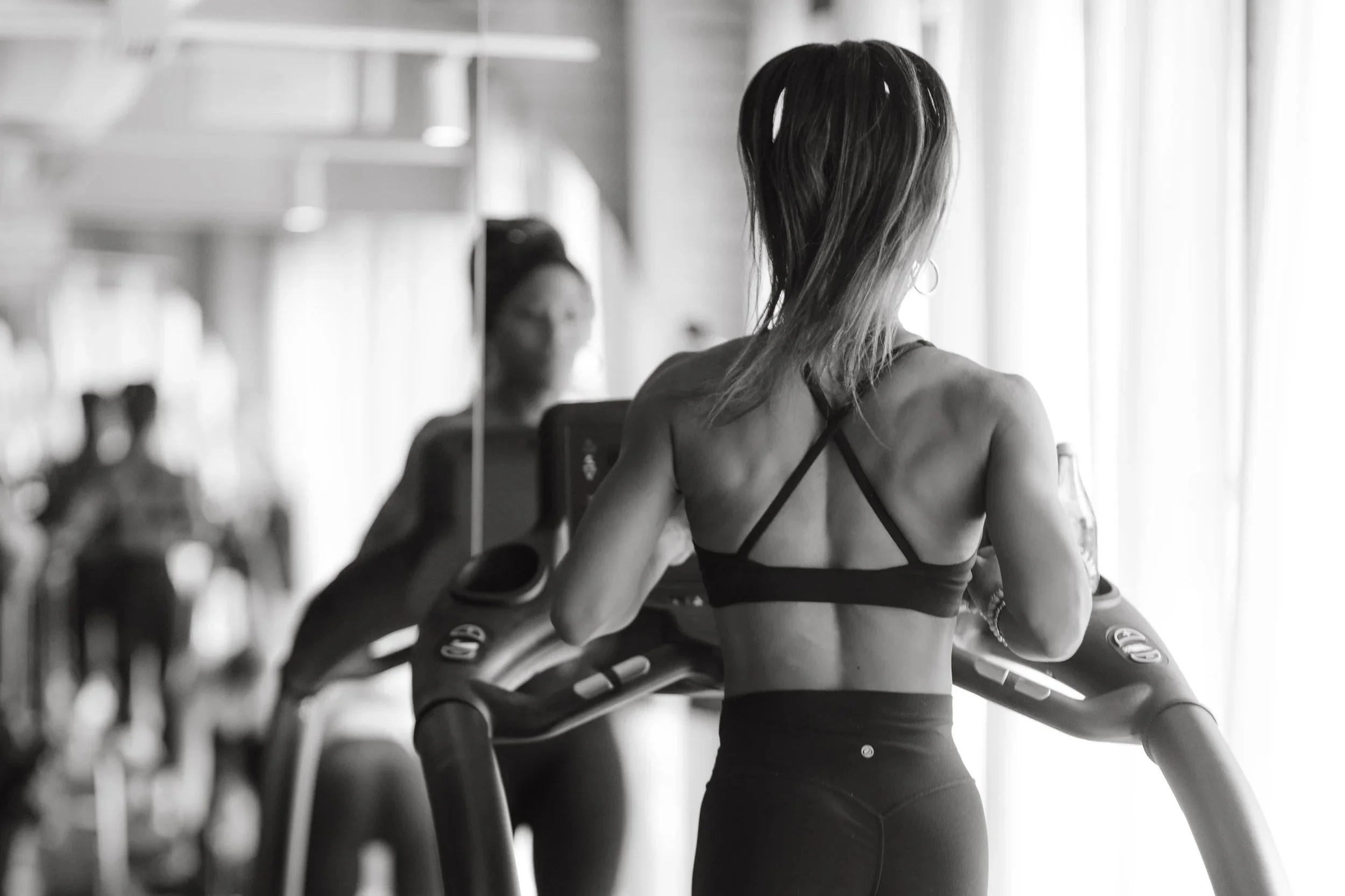
I ran six marathons in 4 years. I did CrossFit on top of it. And my body eventually broke… I broke my hip at age 24. Beyond that break, which really put me out, I was always sore, couldn't recover from workouts, and felt depleted rather than energized. What was actually happening was textbook overtraining: my nervous system never got a chance to shift out of high-output mode, my cortisol stayed elevated, and my body stopped adapting to the work and just started breaking down from it. I loved the cardio. I still do. But more was not making me better, it was wearing me down, and eventually something had to give.
That's the whole reason Rêve exists the way it does.
Cardio is good, but the dose matters. I'm not going to tell you cardio is bad for you, because it's not! It's genuinely one of the best things you can do for your heart, your energy, your longevity, and even your mental clarity. Steady, moderate cardio work improves your VO2 max, keeps your resting heart rate low, and helps regulate the same stress hormones that spike when you overdo it. But there's a dose-response curve here: past a certain point, more cardio doesn't add benefit, it just adds fatigue and inflammation. Most of us find that line the hard way, usually through an injury or a burnout period that felt like it came out of nowhere. We built our tread programming around the dose that actually gives you the benefits. Enough to build a real engine, not so much that your body never gets to recover and adapt.
Climb or run? They train you differently, and you need both. Running is high-impact by nature: every stride is a small deceleration force through your joints, which is exactly what builds speed, power, and impact tolerance over time. That's valuable! But it's also cumulative load, and load without enough recovery is how overuse injuries happen. Climbing on an incline changes physics entirely. You're still working hard and your heart rate still climbs, but the impact drops out almost completely, and the work shifts into your glutes, hamstrings, and calves instead of pounding through your knees and hips. Run-only, and you're loading the same joints session after session. Climb-only, and you lose some of the speed and power development that running is uniquely good at. We put both into the programming because your body needs the output running builds and the joint-friendly recovery climbing offers. Do both!!!
Reformer is our answer to strength. After burning out on intense strength training, I wanted something that built real muscle and real tone without the fatigue and injury that used to follow me around for days. Reformer works through spring-based resistance instead of gravity and heavy load, which means your muscles are working the entire time. Through both the push and the controlled return, without your joints absorbing the kind of impact or compressive force that heavy lifting puts on them. It's strength built through control and time under tension, not through a one-rep max. You leave stronger, not wrecked, and work more of your endurance muscles, which tend to be a more long and lean appearance on our bodies.
And honestly, we built one class because we're busy. I didn't want to pay for a gym membership and a Pilates studio membership and try to schedule my life around two separate places, or squeeze steps in after class just to feel like I'd covered everything. Most of the women I know don't want that either, and definitely don't have the time. So we put it all in one class, one membership, one 50-minute session. We hope you love it as much as we do.
