
Running vs. Incline Walking: Which Workout Is Best? Co-Founder molly shares her insight.
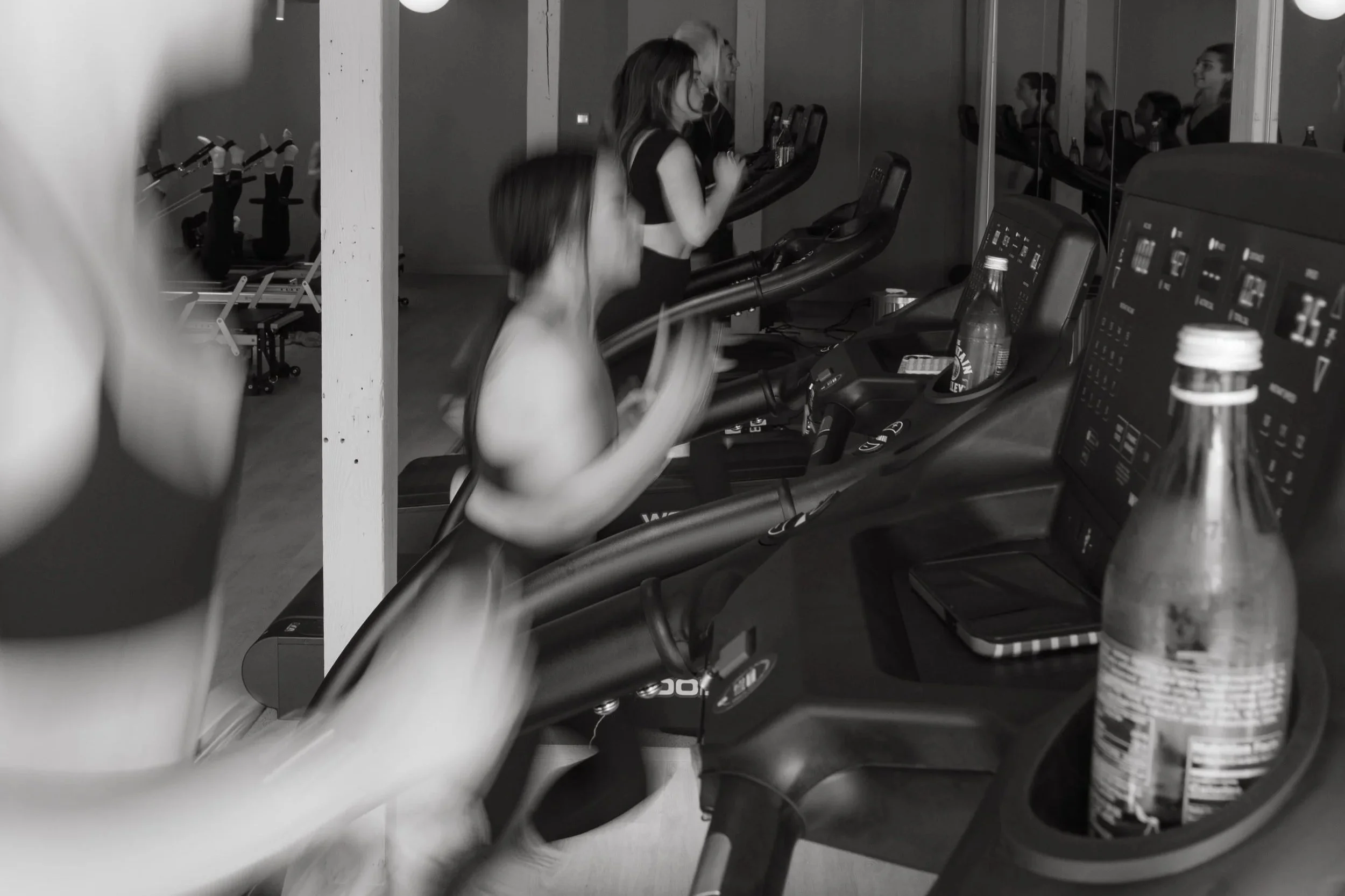
People ask me this in the studio all the time: "should I climb or run today?" The honest answer is it depends on what your body's asking for, not what feels like the harder or more impressive option. Here's how I actually think about it every time I take class.
Ask what your joints did yesterday or this week. Running is high-impact — every stride sends a small deceleration force through your ankles, knees, and hips. That's not a bad thing, it's actually part of what builds bone density and impact tolerance over time. But it's cumulative. If you ran hard yesterday and hit your fastest sprints, or you're just feeling stiff and achy in your joints rather than your muscles, that's your body telling you it needs a lower-impact day. Climb instead. The incline gives you the same cardiovascular demand without asking your joints to absorb anything. I personally do max of three days of sprints/ running per week.
Ask what you're actually training for. If speed, pace, or power is the goal, training for a race, wanting to get faster, wanting your legs to feel explosive…running is going to get you there in a way climbing can't fully replicate. The neuromuscular pattern of running at speed is specific, and there's no substitute for practicing it! If your goal is building your engine, your glutes, and your posterior chain without beating up your joints, climbing does that job better, especially if you're newer to cardio or coming back from time off.
Ask how your energy actually feels, not how you think it should feel. This is the one people skip, and it can be hard for me too. Low energy, poor sleep, feeling run down? That's a climb day for me. Your heart rate will still climb, you'll still get a real cardio benefit, but you won't be asking your nervous system to do the harder work of high-impact output on top of being depleted. Save the running for a day you've actually recovered enough to handle it. Pushing a hard run through exhaustion is exactly the pattern that led to my hip breaking at 24. I wasn't listening to what my body was actually telling me, I was just doing what I thought I was supposed to do. Also, carbs - we gotta eat carbs before and after sprinting. If you’re coming in at 6am with nothing in your stomach, it may not be the best time to sprint (or eat a little something first)!
What's actually happening in your muscles. This comes down to muscle fiber type, and once you understand it, the decision basically makes itself. You've got type 1 fibers (slow-twitch) and type 2 fibers (fast-twitch), and they're built for completely different jobs. Type 1 fibers are endurance fibers- they fire slowly, resist fatigue, run mostly on oxygen, and they're what get trained on a steady climb or a long, moderate effort. Type 2 fibers are power fibers — they fire fast, fatigue quickly, and they're what get recruited when you're sprinting, pushing pace, or asking your legs to move explosively. Running, especially at speed, demands a lot more from your type 2 fibers. Climbing, steady and incline-based, leans much harder on type 1 (same with Pilates!!)
You need both fiber types working well, and neither one gets trained by accident. Only run and you're constantly taxing type 2 fibers without giving type 1 the steady, aerobic work it needs to build real endurance capacity. Only climb and your type 2 fibers start to lose some of that fast-twitch responsiveness, since they're not getting asked to fire. So here's why the choice actually matters beyond just how the workout feels. Type 2 fibers are the ones with real growth potential… they're thicker, they respond to power and speed work by getting denser, and they're a big part of what gives legs that toned, defined shape, especially through the quads and calves. Training them regularly through running also builds bone density and improves your body's ability to produce quick power, which matters for everything from your training to just catching yourself if you trip. But type 2 fibers fatigue fast and don't have much staying power, so they're not the fibers doing the work when you need to last.
Type 1 fibers are the endurance workhorses, and they show up on your body differently. Less about size, more about definition and that lean, long look, since they're smaller fibers packed with mitochondria and built to work for a long time without quitting. Training them through steady climbing (and Pilates) builds your aerobic base, lowers your resting heart rate over time, and is what actually improves your ability to recover between hard efforts, which is a huge piece of not burning out. Health-wise, that steady aerobic work is also doing more for your longevity, your cardiovascular efficiency, and your stress hormones than the harder, flashier sessions ever will.
So the real question isn't just fast versus steady, it's what you're trying to build. Want more definition and power in your legs, more explosive strength? Maybe choose to run a little more in class. Want a leaner, more endurance-built physique and a stronger aerobic engine that supports everything else you do? Maybe you choose to climb more. Most of us need both, just not in equal amounts every week, and now you know which one is actually doing what.
Decide based on your goals, and how your body feels that day. I aim for 2-3 run days a week and 2 climbs. Some weeks, it looks nothing like that, I always check in with my body first.
